Sunday, April 27, 2014

Blueocean counts on India, to hire over a 1000 employees


MUMBAI: While most data analytics companies are figuring out ways to grow at a faster clip in traditional markets in the West, Blueocean Market Intelligence is betting on rising demand from India and other emerging countries. To that end, the Mumbai-based firm is ramping up its headcount to over a thousand from the current 700 and is also scouting for acquisitions. 

The company, which bought UK-based analytics technology platform Cognicient earlier this year, is looking for businesses that would help it scale. "We don't want to acquire for size," Ashwin Mittal, president of the company said. "We would look for technology platforms, or companies that would help us scale up in the financial services and automotive space." Blueocean has strong offerings in the technology, consumer goods and life sciences space, Mittal said. 

Technology platforms will also help the firm drive revenue without having to add an equivalent number of employees, what is called non-linear growth in IT industry parlance and is much sought after in the sector. For analytics firms, with industry attrition rates north of 20% and a limited number of possible recruits, breaking the link between revenue and employees is key to future success. 

The acquisition of Cognicient gave the firm a foothold in the UK market that it will look to grow further. It currently has offices in Dubai, the United States and India. When Blueocean was set up in 2000, it had expected to focus on the Indian market for data analytics. Then, the market in India was not large enough and the firm focused on the much bigger US market, which now accounts for about 80% of its revenues. 

"The US does account for the bulk of our revenues but as we grow in other markets, the share of the US to our revenues could come down to about 60% in the next three to six years," Mittal said. He, however, declined to give the company's revenue but said the company was growing rapidly. 

The market for data analytics is huge. Research firm IDC says the big data analytics market will be worth $24 billion (Rs 1.4 lakh crore) in 2016. And everyone from specialist analytics services firms such as MuSigma to IT players like Tata Consultancy Services and Infosys are gearing up to get a piece of the pie. Blueocean said it is seeing an increase in interest in analytics in India. 

"The market here is small but it is increasing in size. So far, our focus has been on the US but now we will look to grow in the Indian market as well," Mittal added. The Indian market is currently being sized by the company and the National association for software and services companies for the annual analytics report which will be released in June at hyderabad

Saturday, April 26, 2014

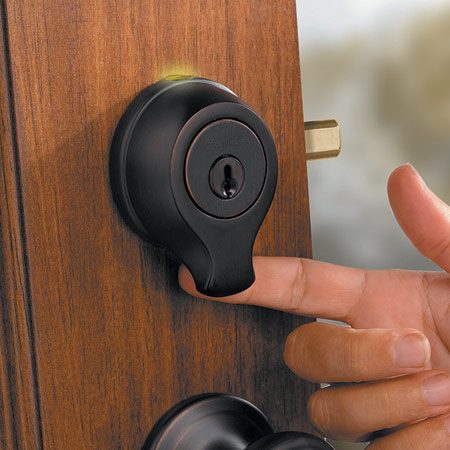
Where to find keyless finger-scan locks

Several companies offer biometric keyless locks for entry doors, mostly in the $200 range (as of 2008). One company is Kwikset. Its SmartScan locks are available at home centers and hardware stores (find retailers and more info at Kwikset.com). When you swipe your finger across a sensor, it reads your fingerprint and activates the battery-powered dead bolt. You don't need a key or a key code. Installation doesn't require hardwiring, and the batteries last about one year.
Other companies also sell keyless fingerprint locks. Search online for “fingerprint door locks.”

Sleek iPhone 6 Concept

If you’ve got your pulse on the internet you may know that this iPhone concept is not new (the video was uploaded a year ago), but it doesn’t change the fact that IT IS SO COOL. The concept was made by YouTube user Schoolpost who creates short films, visual effects, motion graphics, and animation. Let us know what you think in the comments. Does this concept beat out the current model?


iPhone-concept-design-2

DoCoMo to exit India at $1.3bn loss

MUMBAI: Japan's biggest mobile operator NTT DoCoMo is disconnecting from Tata Teleservices, its partner of five years, by offloading its entire stake at as low as half the original acquisition price of $2.6 billion. It becomes the second Japanese major to exit India in recent weeks after Daiichi Sankyo sold its interests in Ranbaxy Laboratories.

The over two-decade-old DoCoMo had acquired a 26.5% stake in Tata Teleservices between 2009 and 2011 in a deal that was supposed to catapult it into the telecom industry big league but cut-throat tariff competition, regulatory uncertainty and billions of losses have forced the Japanese biggie to hang up on Asia's third largest economy. Besides, this move has left a question mark on Tata Teleservices' future.

Under the 2009 joint venture agreement, DoCoMo had two options: one, to increase its stake to 51% in two phases by March and the second to sell its stake for half the acquisition price or at a fair market price, whichever was higher. Both the options were linked to performance targets and with the Indian joint venture missing the targets, the Japanese major has decided to dial out of Tata Teleservices.The Tata Group holds 65% in India's seventh-largest mobile services company, which lags far behind telecom giants Bharti Airtel and Vodafone. Singapore government's investment arm Temasek and serial entrepreneur C Sivasankaran too own small stakes in the company. DoCoMo said it will exercise its sale option by June.

"We invested in India because at the time we saw excellent growth prospects in emerging countries and we wanted to be involved there," DoCoMo CEO Kaoru Kato said. "We decided to sell because the growth we've seen in five years is not what we expected. Though, withdrawing was a very bitter decision." In FY13, Tata Teleservices reported a loss of Rs 4,858 crore, while its debt was Rs 23,491 crore.

A host of problems like delay in introducing 3G services, telecom licence cancellations and corruption scandals led to the JV's dismal performance, claimed DoCoMo.

In a statement, Tata Group's holding company, Tata Sons, said, "As stated by DoCoMo, it is not possible to predict how events will unfold; however, Tata Sons is cognizant of its responsibilities, and will act keeping in mind the interests of all stakeholders and in accordance with law."

With DoCoMo exiting the alliance, the Tata Group will come under pressure to fund the buyout as well as improve the telco's performance. "With an over 60% promoter stake and recent promise of equity infusion to sustain operations, it places pressure on the Tata Group as a whole. While continuing with operating performance improvement at Tata Teleservices is a pre-requisite, one cannot however rule out group considerations, including consolidation or finding replacement partners," said Thomas Kuruvilla, managing partner at Arthur D Little, a global consulting firm.

Media reports suggest that Vodafone and Russian conglomerate AFK Sistema, which owns MTS India, have held separate talks with Tata Teleservices to combine the business with the Tata Group either bowing out of the telecom business or holding a minority stake in the merged entity. However, Tata Sons said that the company "continues to be an integral part of the Tata Group". India's largest private sector conglomerate recently inked a deal to sell its South African fixed line telecom operator Neotel to Vodafone.

Shahid Kapoor in Vishal Bhardwaj's Maha Kaminey


Shahid Kapoor in Vishal Bhardwaj's Maha Kaminey
Shahid has said that Vishal's Haider is his toughest project till date
Actor Shahid Kapoor is all set to star in Vishal Bhardwaj's Maha Kaminey, which is the sequel to his 2009 hit film Kaminey.

Kaminey had Shahid, Priyanka Chopra and Amol Gupte in lead roles. The film was produced by UTV Motion Pictures.

The film was set against the backdrop of the Mumbai underworld and told the story of a pair of twins, one with a lisp and the other with a stutter.

"The sequel to Kaminey, Maha Kaminey will be made. It will have Shahid in it. It will be more interesting. But the work on this project will start after Haider," sources close to the development said. (Also read: Shahid talks about Haider)

The makers have been planning to make the sequel for quite some time.

Vishal Bhardwaj is presently working on his Haider which stars Shahid and Shraddha Kapoor besides Tabu, Irrfan Khan and Kay Kay Menon. (Also read: Shahid excited about Haider final schedule)

Maha Kaminey will be third collaboration between Shahid and Vishal after Kaminey and Haider.

Saturday, August 31, 2013

Petrol gets COSTLIER by Rs 2.35; diesel 50 paise

In the sixth such hike in three months, petrol price has been increased by a steep Rs 2.35 per litre and diesel by 50 paise per litre on falling rupee and firming international oil prices.
The increase in rates, which will be effective midnight on Saturday, are excluding local sales tax or VAT, Indian Oil Corp, the nation's largest fuel retailer, announced. The actual hike will be higher and will vary from city to city.

Petrol price in Delhi will go up by Rs 2.83 to Rs 74.10 per litre while it will cost Rs 81.57 per litre in Mumbai as against Rs 78.61 currently.
This is the sixth increase in rates since June and in all petrol prices have gone up by a massive Rs 9.17 per litre, excluding VAT. Price of petrol in Delhi has gone up by over Rs 11 per litre after including state tax since June 1.

In a parallel move, diesel price was hiked by 50 paise, excluding VAT, in line with the January decision of the government allowing oil companies freedom to raise prices in small doses every month to wipe out mounting losses.
Diesel price in Delhi has been hiked by 57 paise to Rs 51.97 per litre while it will cost Rs 58.86 in Mumbai from tomorrow as compared to Rs 58.23 currently.

Saturday's hike in the eighth since the January 17 and most of the losses on diesel sales should have been wiped off by now to make the fuel market priced. But the fall in rupee, around 25 per cent since April, has worsened the situation and oil firms are losing Rs 12.12 per litre despite prices being raised by a cumulative Rs 4.75 this year.
Oil firms had on June 1 raised petrol prices by 75 paise, excluding VAT, and followed it with a Rs 2 per litre increase on June 16, a Rs 1.82 increase on June 29, Rs 1.55 hike on July 15 and 70 paise increase from August 1.

IOC said since the last revision in rates effective August 1, the rupee-US dollar exchange rate has deteriorated sharply, from Rs 59.49 to a US dollar to Rs 63.88, necessitating this price increase.
"Currently, the rupee-dollar exchange rate continues to be extremely volatile. Also, geopolitical situation in the Middle-East is leading to pressure on international oil prices as well," it said in a statement.
The movement of prices in international oil markets and exchange rate were being closely monitored and subsequent price changes will reflect developing trends of the market, it added.

Deteriorating exchange rate has led to widening of losses on diesel from Rs 10.22 in first fortnight of August to Rs 12.12 per litre loss. The same has also led to widening of under-recoveries on kerosene to Rs 36.83 per litre from Rs 33.54 at the beginning of the company and on LPG to Rs 470 per cylinder from Rs 411.99.
For the full fiscal, IOC estimated total revenue loss or under-recovery of Rs 144,000 crore on sale of diesel, LPG and kerosene for the industry.

Why Nelson Mandela has six names

Nelson Mandela became an international figure while enduring 27 years in prison for fighting against apartheid, South Africa's system of racial segregation.

But while the world may know him as Mandela, the man considered to be the founder of South Africa's democracy is known by a number of others names in his own country. Some of the monikers date from his childhood, while others reflect the respect felt for an anti-apartheid hero and the country's first black president

Rolihlahla

At birth he was given the name Rolihlahla Mandela by his father, Nkosi Mphakanyiswa Gadla Henry, according to the Nelson Mandela Foundation. In Xhosa, one of the official languages of South Africa, "Rolihlahla" means "pulling the branch of a tree." More commonly, it's said to mean "troublemaker."

Nelson

The name "Nelson" first made an appearance when the young Mandela was at primary school. According to the Nelson Mandela Foundation, it was given to him by his teacher, Miss Mdingane, on the first day of school in the village of Qunu, but it's unclear why she chose that particular name. It was the early 1920s and, at that time, it was customary to give African children English names to make them easier for British colonials to pronounce.

Madiba

In South Africa, Mandela is most commonly referred to as Madiba, the name of the Thembu clan to which he belongs. Madiba was the name of a Thembu chief who, in the 19th century, ruled over a region called the Transkei in the country's southeast. Referring to Mandela as Madiba is a sign of endearment and respect, according to the Nelson Mandela Foundation. This hut is at the "Great Place" palace at Mqhekezweni where Mandela lived as a child under the guardianship of Thembu regent, Chief Jongintaba Dalindyebo.

Tata

Considered the founding father of democracy in South Africa, Mandela is also referred to by many as simply "Tata," the Xhosa word for "father." Here, he receives a hug from a Soweto girl during a visit to a black township near Johannesburg in 1990.

Khulu


The Xhosa language also offers another term of endearment for Mandela. "Khulu" is the shortened word for "uBawomkhulu," which means "grandfather." The word also means "great, paramount, grand," according to the Nelson Mandela Foundation.

Dalibhunga

At the age of 16, Mandela, like other Xhosa boys, was formally initiated into manhood through a traditional Xhosa ceremony. At the time, he was given the name of Dalibhunga, which means "creator or founder of the council" or "convenor of the dialogue," according to the Nelson Mandela Foundation. It adds that, when using the name to greet Mandela, the correct usage is "Aaah! Dalibhunga." This image show young boys from the Xhosa tribe attending a traditional initiation school in Libode in 2008


Amitabh Bachchan: NO desire to make KBC format contestant friendly

Amitabh BachchanAmitabh Bachchan will host the seventh season of the gameshow Kaun Banega Crorepati (KBC), which he has helped to make so popular.
The format of the show remains the same but there are a few changes -- the prize money has been increased to Rs 7 crores, a life line called Power Paplu has been added, the fastest finger first will not be the best out of three, the time limit of the phone-a-friend has increased, and the set and location has changed.
Bachchan doesn’t like to take credit for the popularity of the show. "I take zero credit. The show is very well constructed and not just a simple question and answer thing. Very deep research has gone into it.

No more kisses for Mrs Kareena Kapoor Khan

Ajay Devgn and Kareena Kapoor in SatyagrahaIn Prakash Jha’s Satyagraha, there is a romantic love song called Ras Se Bhare Tore Nain Saawariya, picturised on Ajay Devgn and Kareena Kapoor Khan.

The sequence had required Kareena and Devgn to kiss and make love.

However, one hears Kareena, otherwise a very dedicated artiste, flatly refused do the intimate scene with her co-star.

In Vishal Bhardwaj’s Omkara, Kareena had done some intimate scenes with Devgn but that had come before her marriage.

"Prakashji wanted at least a brush-on-the-lips since this was a very passionate moment between the lead pair. But after marriage, Kareena will not do any intimate scenes with any of her co-stars. Not even her husband Saif. There is a certain code of conduct that Kareena must follow as a Pataudi bahu. Also, Kareena would do nothing to hurt her mother-in-law (Sharmila Tagore) whom she loves dearly," says a source from Jha's unit.

So Prakash Jha had to make do with just the suggestion of a kiss and zero-proximity between the pair.

Says one of Kareena’s co-stars from Satyagraha, “Bebo has always been fearless before the camera. It isn’t as if she hasn’t done kissing scenes. She kissed Aamir in 3 Idiots, didn’t she? But I think Heroine was her cut-off point as an actress. She did that very bold role with no holds barred and I think she has made up her mind to avoid all intimacy on screen after marriage. Prakashji had to fudge the kissing scene and we just see Bebo lying fully-clothed and alone in bed."

Amitabh Bachchan returns with Kaun Banega Crorepati

Amitabh Bachchan is back with Kaun Banega Crorepati's seventh season. The newest edition of the quiz show will have a prize money  of Rs 7 crore and feature five life-lines.

‘OFF now to the Press Conference for KBC .. to reveal new look and details of Season 7 .. dadada daaaain .. !!’ Amitabh tweeted.

He also shared a picture from the inaugural episode and tweeted: ‘KBC opener, Sept 6, 8.30 Sony...with the incomparable Sonu Nigam ... huhuhhuh haha aahhhuu .. YEEEAAHHH !!

He shared another picture and added: ‘Working the opening of the 7th season KBC .. yours truly .. tasseled shoes and all ... yeeeaaaahhhh baby!’ 

Starting September 6, the show will air from Friday to Sunday at 8:30 pm on Sony TV.

Friday, August 30, 2013

Microsoft and Google to sue over US surveillance requests

Technology firms want to be allowed to publish information about US government requests under the Fisa legislation
Microsoft's Brad Smith
Microsoft's legal counsel Brad Smith said in a blog post: 'We believe we have a clear right under the US constitution to share more information with the public.
Microsoft and Google are to sue the US government to win the right to reveal more information about official requests for user data. The companies announced the lawsuit on Friday, escalating a legal battle over the Foreign Intelligence Surveillance Act (Fisa), the mechanism used by the National Security Agency (NSA) and other US government agencies to gather data about foreign internet users.
Microsoft's general counsel, Brad Smith, made the announcement in a corporate blog post which complained of the government's "continued unwillingness" to let it publish information about Fisa requests.
Each company filed a suit in June arguing that they should be allowed to state the details under the first amendment, which guarantees freedom of speech, and in the process defend corporate reputations battered by Edward Snowden's revelations. Critics accused the companies of collaborating in the snooping.
"On six occasions in recent weeks we agreed with the department of justice to extend the government's deadline to reply to these lawsuits. We hoped that these discussions would lead to an agreement acceptable to all," Smith wrote.
The negotiations failed, he wrote, so Google and Microsoft were going to court. He did not specify when, or to which court.
"With the failure of our recent negotiations, we will move forward with litigation in the hope that the courts will uphold our right to speak more freely. And with a growing discussion on Capitol Hill, we hope Congress will continue to press for the right of technology companies to disclose relevant information in an appropriate way."
Snowden, a former NSA whistleblower, gave documents to the Guardian and Washington Post revealing NSA claims about access to technology firms' data via its Prism system.
The companies denied the NSA had "direct access" to their systems but said they were legally unable to disclose how many times they have been asked to provide information on users.
Fisa requests are granted by a special court that sits in secret and can grant the NSA permission to collect data stored by any company about a named person. In 2012, the court granted 1,856 requests and turned none down.
"We believe we have a clear right under the US constitution to share more information with the public," said Smith's post. "The purpose of our litigation is to uphold this right so that we can disclose additional data."
He welcomed a government announcement earlier this week that it would begin publishing the total number of national security requests for customer data for the past 12 months.
"But the public deserves and the constitution guarantees more than this first step. For example, we believe it is vital to publish information that clearly shows the number of national security demands for user content, such as the text of an email."
Such figures should be published in a form that is distinct from the number of demands that capture only metadata such as subscriber information associated with a particular email address, said Smith.
"We believe it's possible to publish these figures in a manner that avoids putting security at risk. And unless this type of information is made public, any discussion of government practices and service provider obligations will remain incomplete."
The post sought to position Microsoft and Google on the moral high ground, linking them to the values of the founding fathers. "We benefit from living in a country with a constitution that guarantees the fundamental freedom to engage in free expression unless silence is required by a narrowly tailored, compelling government interest … our hope is that the courts and Congress will ensure that our constitutional safeguards prevail."

5.9-magnitude earthquake strikes southwest China

A 5.9-magnitude earthquake struck Saturday morning in southwestern China, according to the U.S. Geological Survey.
Officials reported one death and three people injured as emergency teams began to respond, state-run Xinhua News Agency said.
The quake -- with a depth of 10 kilometers -- hit in remote areas near the border of the Yunnan and Sichuan provinces, according to the USGS.
Roads are reportedly blocked in some villages by boulders rolling down mountains, and some villagers have been taken to hospitals, Xinhua said.
The Civil Affairs Ministry in Yunnan province was sending tents and clothing, Xinhua said.
The epicenter was near Benzilan Township, the USGS reported.
"We are heading to Benzilan," Liao Wencai, vice secretary of the Deqen County Committee of the Communist Party of China, told Xinhua. "The telecommunication there has been cut off, and many residents cannot be reached by mobile phone."
On Wednesday, a 5.1-magnitude earthquake hit the same region.

Accessorize Your Infant With This Sensor Riddled Sock So You Can Sleep At Night (VIDEO)

smart baby sock Accessorize Your Infant With This Sensor Riddled Sock So You Can Sleep At Night (VIDEO)
Raising a child is a stressful venture into the realm of trial-by-error that could leave parents wondering if they are doing an adequate job. Among the most stressful periods of childhood on a parent is infancy – when the thought of leaving a baby unattended sends chills down the spines of parents trying to get some sleep. What if the parents of a sleeping infant could know what position their baby is in without getting out of bed? Beginning in autumn, this, as well as the ability to monitor an infant’s quality of sleep, blood oxygenation levels, and skin temperature, will be within reach.

Owlet Baby Care has developed a “smart sock” that may ease the stress of parenthood by monitoring infant comfort and safety, and transmitting this information via Bluetooth 4.0 to a synced smartphone. The data are available at the swipe of a touchscreen, or on the cloud through any Internet connected device. This may be a revolutionary approach to baby monitoring, changing the game from mere audio/visual monitoring to the utilization of a suite of sensors typically found in consumer electronics.
A relevant use case of this technology may be in the prevention of sudden infant death syndrome (SIDS). It is believed that an infant’s sleep position is a contributing factor to SIDS. More specifically, it is recommended that infants only sleep on their backs, and never face-down. The new baby monitor developed by Owlet is designed to help prevent this by monitoring the baby’s sleep position and setting off an alarm if a face-down rollover occurs. Hopefully, this new technology will help lower the number of infant deaths due to SIDS, as well as help the parents of newborn babies get some much needed rest.

The device that could change life for the visually impaired

For the visually impaired, the supermarket can be a daunting place to visit. Buying groceries is not an easy task when you have trouble seeing.
But for people like Liat Negris, life is about to become a lot easier.
By wearing the OrCam, Negrin can point to what she wants to read and the device will do it for her.
She said: “It gives me independence, you know, I can do anything by myself. I don’t need favours, I don’t need to be escorted anywhere, I can go to new places without memorising again and again the way”.
The Israeli start-up company, OrCam technologies created the pocket-sized computer using a sensitive camera and sophisticated algorithms.
The camera can be attached to a pair of glasses and scans what appears before it. The device is programmed to recognise a finger, and when the user points to a sign, a newspaper, a traffic light and more, it can read what appears in front of it.
Chairman of OrCam Technologies, Amnon Shashua, said:“People with low vision, they see something but not enough in order to manage their daily lives. So we were thinking about, assume that you have a helper standing beside you, looking to the same direction you are looking at and understands what you are seeing and understands what kind of information you want to get out of the scene.”
The OrCam uses bone-conduction technology, which conducts sound to the ear through the bones of the skull rather than by using an ear piece, so the user’s ear is not obstructed.
It can read bus numbers and red or green signals at pedestrian crossings. It knows how to recognise new products and even faces.
The device can also be used by people who are totally blind, but because a blind person is unable to point exactly at what they want to have read, it must be used differently.

Developing self-destructing mobile phones

The average lifespan of a mobile phone is about 12 to 18 months, depending on your chosen service provider. But what if instead of discarding your outdated model, the device could simply self-destruct, reducing landfill e-waste and airborne toxins?
That is what researchers at the University of Illinois are working on.
Professor John Rogers is a materials science engineer and chemist at the University of Illinois. He showed us what they can already do: “This is an example of a transient integrated circuit. It’s a simple radio circuit. It involves transistors, some diodes, resistor lines, capacitors, conductors. It’s all built on a thin film of silk, which is a naturally occurring material.”
‘Transient electronics’ means bio-compatible devices that just disappear or dissolve at the end of their useful life without posing a threat to the environment.
The self-destructing microchip made of natural fibres is part of a project called ‘Born to Die’.
“They are born to die, but born to die in a very controlled way. So we’re not talking about unreliable, flaky electronics. We’re talking about electronics that are very specifically engineered to have excellent properties, time independent, until the programmed moment at which you don’t need the device any more and then it dissolves away. That’s the trick,” added Professor Rogers.
Of course it is a huge jump leap from creating a small vanishing chip, to equally soluble motherboards capable of driving the sophisticated electronics we use every day. But Rogers argues that this is the direction to go.
“If you could make key components or eventually the entire mobile phone out of materials that would last for three, five years and then naturally dissolve, that would be ideal,” he concluded.
The research team is also studying the potential use for such devices in the military and medical care, as well as this technology’s benefits for people and the planet.
The evolution of self-destructing devices could be revolutionary. In the US in 2010 alone, about 150 million used phones were dumped into landfills.
Every year 20 to 50 million tonnes of e-waste is generated worldwide

Innovative and eco-friendly: the office of the future

Called NuOffice and built in Germany, it is considered to be one of the most sustainable office buildings in the world. It uses energy-efficient heating, cooling, ventilation and lighting and aims to minimise its environmental impact.
The building in Munich was completed in November 2012.
Taking a look back at the construction process reveals some of its eco-friendly features.
One of the building’s energy saving secrets is hidden inside its walls.
Hubert Haupt is the owner of the building.
“We have thick exterior walls,” explained Haupt.
“So we don’t have to cool in the summertime and we don’t need to heat a lot during the winter months, which reduces the tenants’ energy expenses. We have worked intensively with simulations, especially in terms of where we placed the windows, because we wanted the energy output to be ideal, and at the same time to have enough daylight in the building. There were many details we had to consider within the broad theme of sustainability.”
Turning away from the glass-walled style of office buildings that have been popular in recent years, the windows at NuOffice are more modest in size and triple-glazed. This means cooler interiors on hot days, reducing the need for air conditioning and less heating on cooler days.
But the building’s greatest secret is found in its basement: an innovative new heating system.
The building’s engineer Romano Schillinger oversaw the progress of its construction.
“Tube loops inside the thermo active ceiling enable us to regulate the temperature inside the concrete. Heating or cooling the mass of concrete from the core results in a consistent warming or cooling of the rooms,” Schillinger said.
Additionally, the office is connected to district heating in the wintertime. In the summer, well water is used for cooling.
Electricity power is given a boost by solar panels on the roof.
Michael Krause and his team from the Fraunhofer Institute for Building Physics developed the energy concept.
“Now, since the building has been completed and is in operation, we can measure the energy usage and calculate the energy efficiency of the building,” said Dr Krause, the Group Manager of Building Systems and Services.
Sensors measure the temperature and air humidity both inside and outside the building. This data is used to regulate the indoor climate.
“At the end of the year we expect a primary energy consumption of about 30 kilowatt-hours per square metre, per year. Conventional new office buildings which don’t have any ambitions concerning energy savings range between 100 and 150 kilowatt-hours per square metre each year,” said Dr Krause.
And the low energy consumption of the building has other benefits too.
With local energy prices jumping by over 50 per cent in the last 10 years, green buildings are a welcome solution to rising costs.
Good for the bottom line, and the environment.

Syria’s humanitarian crisis quickens pace


As the possibility of an American air strike on Syria increases, the flow of refugees leaving the country has quickened, with 12,000 people arriving in Lebanon on Thursday alone.
Around 700,000 are already there, in a country with a population of four million. It has stretched Lebanon’s ability to take care of them beyond breaking point.
“There is no space left, it is crowded with refugees here. At first they were afraid of the chemical weapons, now they are afraid of the new attack. Everybody flees to this place,” said a Lebanese relief organisation representative.
The situation is becoming so critical that it is alarming the United Nations.
“In Syria we are witnessing the physical destruction of the country, a collapse of many of the state institutions and an enormous suffering of the people – those who have been killed and those who have to flee in all directions,” said Antonio Guterres, UN High Commissioner for Refugees.
“In these circumstances, the most important contribution a country can give to this humanitarian drama is to keep the borders open for those in need of protection.”
Jordan has half a million refugees, Turkey 400,000, and Iraq 150,000. Keeping those frontiers open will be extremely difficult.
“The humanitarian needs are immense. There are acute shortages of vital medical supplies, water, food, especially in areas that have been sealed off for months and
where the IRC and the Syrian Arab Red Crescent were not granted access,” said the ICRC’s Dibeh Fakhr.
Add to these figures the more than four million people who have been internally displaced within Syria and it adds up to a humanitarian time bomb whose fuse is burning ever shorter.

Can a smartphone replace your doctor?


Cardiologist Dr Eric Topol is a practitioner of the future of medical consultation – equipped with a smartphone and some sensors.
One of his patients – Bill Sousa – has recently had heart surgery and Dr Topol is showing him how they can remotely monitor his recovery.
The doctor has one sensor that check the rhythm of his heart and another that clips over the tip of his finger to determine the oxygen level in his blood stream. The sensors connect to a smart phone and a specialised app sends the results to the cardiologist’s office.
Dr Topol explained: “Instead of having it [the equipment] at a hospital for $3,000 – that’s what it costs, or more, in some places it’s up to $7,000 – you would just use your phone with this app.”
He has developed several of these phone apps himself, convinced they are about to revolutionise medicine itself.
Dr Topol says he is now prescribing more smartphone apps than drugs so he can easily follow his patients’ progress from a distance.
For patients like Bill Sousa, who lives more than an hour’s drive away from the hospital, linking up to a tablet allows him to check his blood pressure twice a day.
He is delighted with how easy it is: “It [the app] automatically sends it [the data] to my doctor, on a weekly basis. So, that’s all I have to do.”
The device is a real money saver in the US, where medical treatment costs more than anywhere else in the world..
Dr Topol and his apps are part of a trend. Soterra Wireless, a San Diego based company, has developed a portable monitoring which is already being tested in a number of hospitals.
Soterra’s Garry Manning explained how it works: “It’s able to show all of the vital signs of the patient: his heart rate, blood pressure, breathing rate, saturation of oxygen, skin temperature…”
And the patient’s doctor is able to follow-up in real time, via a smart phone, even if the person being monitored is on the other side of the world.
Manning said the device can speed up the process and help diagnosis: “Now, they get that information immediately, so they can make very quick decisions. Eventually, we of course, as other companies may do, will be able to take that information and be able to start to predict the patient’s deterioration, ahead of time.”
The ultimate goal is to be able to predict someone’s medical future.
Dr Topol believes that soon we wil be able to detect diseases with sensors placed on or under our skin: “Someday, maybe five years from now, we will have tiny nano-sensors in the blood. They could detect cancer showing up for the first time in the blood.”
What if in the future those devices could replace doctors – diagnosing and anticipating?
Imagine your son has a rash. A small device identifies it, says it is benign and advises some rest.
Or your daughter doesn’t feel well. A sensor takes her body temperature, and analyses a urine sample. This time the app recommends a visit to the hospital as soon as possible and give you directions to the nearest one.
It is not science-fiction, but something which can become a reality very soon.

Thursday, August 29, 2013

Men Feel Threatened When Girlfriends Succeed

Men may subconsciously suffer a bruised ego when their wives or girlfriends excel, regardless of whether it's in the academic or social realm and regardless of whether the couple is in direct competition, a new study suggests.
Psychology researchers found that men had lower self-esteem when their romantic partner succeeded than when their partner failed. Women, meanwhile, were unruffled by the performance of their husbands or boyfriends, the study showed.
"It makes sense that a man might feel threatened if his girlfriend outperforms him in something they're doing together, such as trying to lose weight," lead study author Kate Ratliff, of the University of Florida, said in a statement. "But this research found evidence that men automatically interpret a partner's success as their own failure, even when they're not in direct competition."
A depressed-looking man sits with his hands on his head.
Ratliff and her colleague Shigehiro Oishi, of the University of Virginia, conducted a series of five experiments to look at how self-esteem may be affected by the success or failure of a romantic partner in heterosexual Americans and Dutch couples.
In one study, they recruited 32 undergraduate couples from the University of Virginia. Each participant was given a "test" of social intelligence. The participants read five different scenarios describing a problem someone was having at work or home and had to choose between two different pieces of advice to deal with that conundrum. The students were told there was a correct answer (determined by counselors) and their score on the test would measure their "problem-solving and social intelligence."
The researchers didn't actually grade the tests and the participants were not given their own "scores," but they were told their partner scored either in the top or bottom 12 percent of all university students.
Hearing their partners' scores generally didn't shake the participants' explicit self-esteem, or how they said they felt about themselves in a questionnaire.
But the researchers also measured the participants' subconscious self-esteem, by giving them an Implicit Association Test, which gauges attitudes and feelings that people may not want to report through rapid word associations on a computer screen. Those with high self-esteem, for example, are more likely to associate the word "me" with words like "excellent" or "good" than words such as "bad" or "dreadful." 
Compared with men who believed their partner scored in the bottom 12 percent, men who were told their partner had ranked in the top 12 percent showed lower implicit self-esteem. There was not much difference in the implicit self-esteem of women who thought their partner scored high and women who believed their partner scored low, the experiment found.
The researchers said that similar experiments held true in the Netherlands, which has one of the narrowest gender gaps in labor, education and politics.
Why the disparity? The researchers write that one possibility is that men are typically more competitive than women and thus may be more likely to see a partner's success as their own failure. Gender stereotypes may compound this effect.
"There is an idea that women are allowed to bask in the reflected glory of her male partner and to be the 'woman behind the successful man,' but the reverse is not true for men," the researchers write.
The researchers also point to previous studies showing that women tend to look for ambition and success when selecting a mate.
"So thinking of themselves as unsuccessful might trigger men's fear that their partner will ultimately leave them," Ratliff and Oishi wrote. They noted one of their experiments showed that men who were told to think about a time their partner was successful (in either the intellectual or interpersonal domain) were less optimistic about the future of their relationship than men who thought about their partner's failure.

PORK AND PROTECTIONISM IN AMERICA

china-pork.jpg
China’s farmers, and the land they tilled, were once seen as a sacred symbol of the nation’s ambitious plans for a self-sufficient economy. Over the past several years, though, industrial complexes and housing have encroached on the country’s farmland—even as middle-class people, the beneficiaries of industrial growth, demand more meat, milk, and other farm-grown food. In order to feed a population of nearly one and a half billion, Chinese companies began a global hunt for food—buying farmland in Africa, Latin America, and elsewhere, and snapping up companies that manufacture grain, sugar, spirits, and milk.
Still, for years, Chinese companies avoided the U.S. food and agriculture market, partly out of fear that they wouldn’t be welcome. Now, that is changing. China’s largest state-run food company, known as COFCO, has said that it hopes to invest in American food and farming businesses. And in May, China’s largest hog processor, Shuanghui International Holdings Ltd.,announced plans to buy the American processor Smithfield Foods, Inc. for nearly five billion dollars.
Now, as a U.S. foreign-investment panel reviews the Smithfield deal, Chinese fears of American protectionism appear to be coming true. The planned acquisition has emerged as a symbol of foreign intrusion, raising concerns about how this could hurt American workers, national security, and the economy at large.
Daniel Slane, a commissioner with the U.S.-China Economic and Security Review Commission, which is tasked with monitoring U.S.-China relations, argues that Shuanghui could eventually outsource production to China and then import bacon and sausage into the U.S., at the expense of American workers. “Smithfield has forty-six thousand employees, including people who are just cutting various parts of the pork,” he said. “If I can get that done for two dollars an hour in China, why would I pay somebody sixteen dollars an hour in North Carolina?” Critics also point to endemic food-safety problems in China, which include hog corpses floating in Chinese rivers and pork tainted with banned substances.
Some even argue that Chinese ownership of Smithfield could pose a national-security threat. “The proximity to multiple U.S. bases and key military installations would provide a potential staging area for Chinese espionage efforts to advance the nation’s military program,” a group of farmers wrote to the government panel reviewing the deal. Smithfield “is a significant supplier of pork products to U.S. military installations,” they wrote, and if a merger went through, a Chinese-owned business “would control a portion of the food supplied to U.S. troops.”
Tim Gibbons, the communications director at the Missouri Rural Crisis Center, a nonprofit concerned with preserving family farms, summed up the wary attitude: “I am uncomfortable with foreign countries and their corporations owning and controlling our food,” he told me.
C. Larry Pope, Smithfield’s C.E.O., called such criticism bunk. “The bottom line is that this is all about U.S. exports to the Chinese market, not Chinese exports, or a loss of US competitiveness,” he said in testimony before the Senate. Smithfield has also said that the deal will benefit American farmers, since having a Chinese owner at the helm could increase export opportunities to that country. Pope added that the company’s rigorous food-safety protocols would remain strong under Shuanghui control.
None of this is new: Americans have long had a love-hate relationship with investors from abroad. On the one hand, the American penchant for capitalism and equal opportunity has always enticed foreign investors, from the French funding the Revolutionary War to the British helping finance the construction of the Erie Canal. Indeed, last year, direct foreign investment in the U.S. hit a record $2.7 trillion, following three decades of steady increases.
On the other hand, Americans have long grappled with an existential fear of foreigners controlling U.S. land and food resources. In 1887, Congress passed a law prohibiting alien land-ownership in federal territories, which was backlash to a growing number of foreigners acquiring homesteads and large tracts of land as the country expanded. “The feudal landlord system should find no encouragement in America,” read an April 1887 piece in the Chicago Daily Tribune. In the early twentieth century, amid a wave of Japanese migration, states passed laws prohibiting people “ineligible for citizenship”—a code for those mainly of Asian descent—from owning land. In 1948, the U.S. Supreme Court deemed California’s alien land law racist and unconstitutional; meanwhile, the U.S., after the Second World War, became more attractive for foreign investment.
By the nineteen-seventies, direct investment from abroad had reached record levels. Much of the money was coming from Middle Eastern states flush with oil money and from wealthy Europeans living under the Soviet glare and looking for places with well-protected land rights. The weakened value of the U.S. dollar made American assets a steal.
Farmland, in particular, was a hot commodity, since it was seen as a stable long-term investment. According to news reports, Prince Franz Josef II, then the ruler of Liechtenstein, had bought sixteen thousand acres of prime ranch land in Texas; the Flick family, heirs of German industrialist and infamous Nazi member Friedrich Flick, owned a cattle ranch in Kansas; and descendants of Prince von Metternich owned a farm in Iowa.
This raised the ire of Americans who were loath to relinquish to foreigners the soil that fed them. “Buying by outsiders is taking away the family-based farming communities that have helped make this country what it is,” a farmer told Time in 1978, in an article titled “The Selling of America.” Farmers worried that European aristocrats and oil-wealthy sheiks were driving up the price of land while also wresting control of the nation’s food supply.
“The general thinking was that it would be bad policy to allow foreigners to own the land on which our food is grown,” Roger McEowen, director of the Center for Agricultural Law and Taxation at Iowa State University, told me.
In response to the backlash, Congress called hearings on whether foreign investment should be curtailed. In 1978, it began requiring foreign buyers of farmland to report their holdings to the Secretary of Agriculture. Several Midwestern states also passed laws, or tightened existing laws, limiting foreigners’ rights to own farmland. The laws, for the most part, worked. Today foreigners hold less than two per cent of all agricultural land in the U.S., only a slightly higher percentage compared to a quarter century ago. However, this share is growing as more foreign entities, including pension funds and other investors, look to cash in on a boom in farmland values and commodity prices.
Today, complaints over the Smithfield deal are similarly prompting government scrutiny. And the outcry follows a familiar script: The lament for the vanishing family farm, the dissent over foreigners controlling our food supply, and the anxiety over a triumphant other, in this case the Chinese, who already own nearly $1.3 trillion in Treasury securities. The Senate last month held a hearing on the deal, titled “Smithfield and Beyond: Examining Foreign Purchases of American Food Companies.” And the Committee on Foreign Investment in the United States, a secretive interagency group formed in 1975 by President Ford, has taken up its own examination of the deal.
The truth is that the sale faces few serious stumbling blocks. It’s unlikely that the foreign-investment committee will stop it. Only the U.S. President has the authority to suspend a transaction while it’s being reviewed by that committee; and just twice in American history has a President done that. (Both suspensions, it so happens, were transactions involving Chinese companies.) Virtually no one can stop a deal after the committee has approved it, and in this case, the Smithfield deal is expected to win approval. Smithfield shareholders are set to vote on it next month, and the company has said it plans to close the sale in the second half of this year.
Again and again in U.S. history, the economic arguments for foreign investment have trumped politics. Indeed, foreign companies now own plenty of American food brands. Ben & Jerry’s ice cream is owned by Unilever, a British and Dutch company. Gerber, the baby-food company, belongs to Nestle, a Swiss company. And just a few years ago, the U.S. meat processor Swift & Co. was bought by the Brazilian meatpacking giant JBS. Americans will likely have to get used to the idea of companies from China, and the rest of the world, owning more American food and farms.
Blogger Widgets